Culture and daily life in the oases of the Silk Road.
This site introduces the Uyghur land and people, their history, food, music, culture and language.
The Uyghurs are a Turkic people. Most live in China's Xinjiang Uyghur Autonomous Region, above all in the Tarim Basin between the Tian Shan and Kunlun mountains. The Taklamakan Desert covers most of the basin, and oasis towns on its edge, such as Kashgar and Hotan, were long-standing stops on the Silk Road. Uyghur communities also live in Kazakhstan, Kyrgyzstan, Uzbekistan, Turkey and elsewhere.
Daily life and food
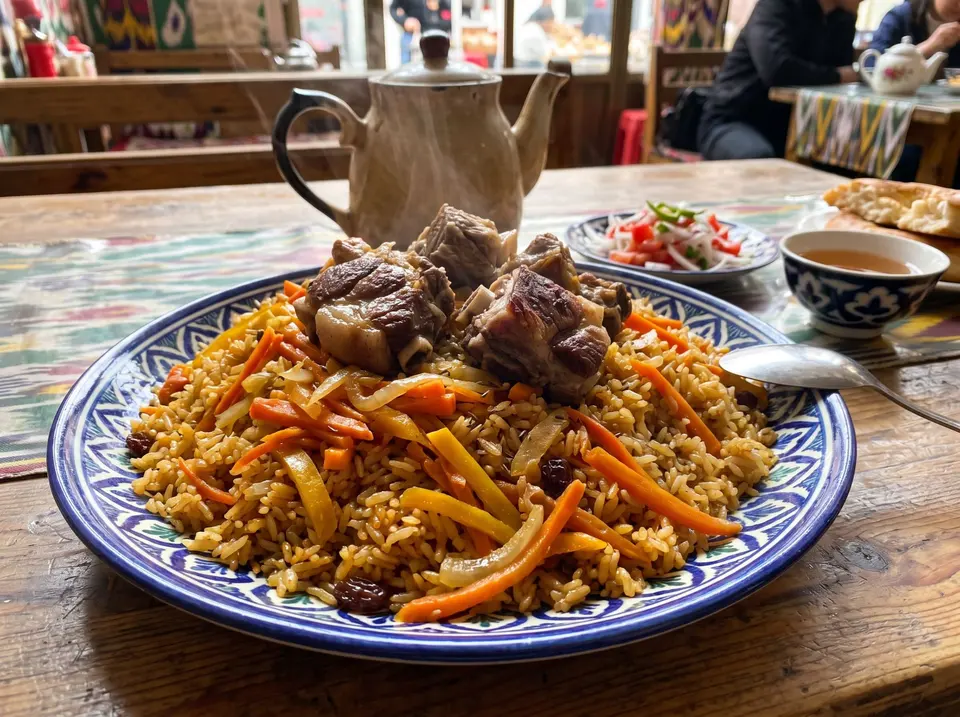
Alongside nan, an essential part of the daily diet, well-known Uyghur dishes include polo, laghman, kawap and samsa baked in a tonur clay oven.
Arts and crafts
Uyghur Muqam, a tradition of song, dance and instrumental music, is inscribed on UNESCO's Representative List of the Intangible Cultural Heritage of Humanity, and crafts such as silk ikat and the embroidered doppa cap live on.
Language and dictionary
Uyghur is a Turkic language, written mainly in a 32-letter Arabic-based script. This site's dictionary is one tool for looking it up.
Source (9)
- [1]Wikipedia (English), “Uyghurs”. Viewed 2026-10-19.
- [2]Wikipedia (English), “Uyghur language”. Viewed 2026-10-19.
- [3]Wikipedia (English), “Tarim Basin”. Viewed 2026-10-19.
- [4]Wikipedia (English), “Hotan”. Viewed 2026-10-19.
- [5]Wikipedia (English), “Uyghur cuisine”. Viewed 2026-10-19.
- [6]Wikipedia (English), “Etles silk”. Viewed 2026-10-19.
- [7]Wikipedia (English), “Doppa”. Viewed 2026-10-19.
- [8]Wikipedia (English), “Uyghur Arabic alphabet”. Viewed 2026-10-19.
- [9]UNESCO Intangible Cultural Heritage, “Uyghur Muqam of Xinjiang” (2008). Viewed 2026-10-19.
A Turkic language written in 32 letters based on the Arabic script.
Uyghur is a Turkic language. It is written in 32 letters based on the Arabic script, and every vowel is written. Start with a greeting.
Five ways into the Uyghur world
Language
How Uyghur works: its 32-letter Arabic-based script, subject–object–verb word order and more.
Food
Dishes such as nan, polo, laghman, kawap and samsa.
Music
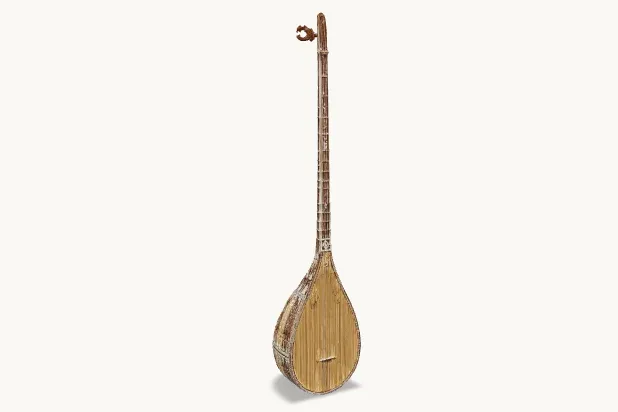
Muqam and string instruments such as the rawap and dutar.
History
The story of a land where East and West met along the oases of the Silk Road.
Culture
Everyday culture through dress and handcraft, from silk ikat to the embroidered doppa cap.