1What it is
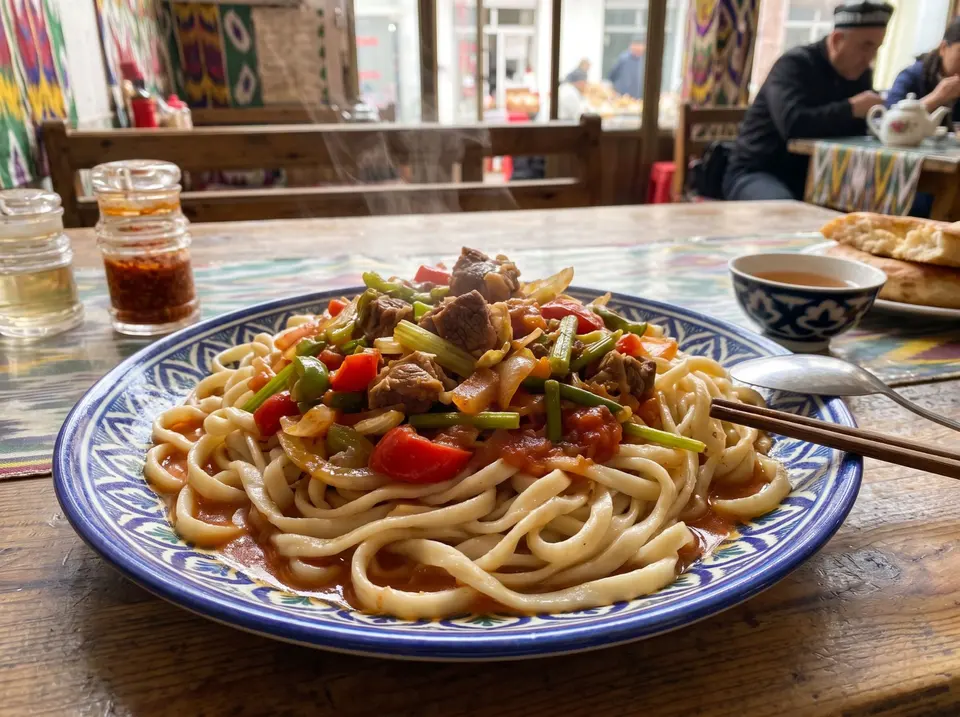
For laghman, a dough of wheat flour is pulled or twisted thin by hand and boiled in water, then eaten with a stir-fried topping. The topping is usually mutton (قوي گۆشى), onions, peppers, tomatoes and other seasonal vegetables.
Laghman most likely comes from the Chinese lamian, but its taste and preparation are distinctly Uyghur. It is also well known in Kazakhstan and Kyrgyzstan.
2Ingredients (one example)
Noodles (for 2)
- 2 cups
- 2/3 cup
- 1/2 tsp
Topping: fatty mutton, onions, chilli peppers, garlic, chopped tomatoes and whatever vegetables are at hand; seasoned with salt or soy sauce and ground cumin, with black vinegar if you like. The topping varies greatly with what is available and in season.
3How to make it (one example)
1. Mix the flour, water and salt, cover and rest for 10–15 minutes.
2. Roll out the dough and cut it into strips, then roll each strip into a round rope. Coil the ropes onto an oiled plate, cover them with oil, and leave them covered for about 20 minutes.
3. Meanwhile make the topping. Fry the mutton, onions, chillies, garlic, vegetables and tomatoes, seasoning early with salt or soy sauce and cumin; the tomato pulls it together into a light red sauce. Add a splash of black vinegar at the end if you like, then take it off the heat and cover it.
4. Bring a large pot of salted water to the boil. Only then pull each noodle from the coil and thin it evenly with your fingers, twisting a little as you go.
5. Gather the ends of the noodles onto your hands like yarn, spread your arms to stretch them once more, and drop them into the boiling water. Stir at once with chopsticks so they do not stick.
6. Do not overcook them. When they float, lift them out and rinse them in cold water. Put them in a bowl, add the stir-fried topping, and black vinegar if you like.
4Eating and variations
Laghman is often served with a chilli sauce made from red pepper flakes, garlic and hot oil. The topping changes with the season and what is available; garlic chives, long beans, potatoes, aubergine, Chinese celery, bok choy and napa cabbage are also used.
Sources (4)
- [1]ئۇيغۇر تىلىنىڭ ئىزاھلىق لۇغىتى(ug.wikipedia 転載)見出し語「لەڭمەن」 (2026-10-14)
- [2]Wikipedia (en)「Uyghur cuisine」 (2026-10-14)
- [3]Wikipedia (en)「Laghman (food)」 (2026-10-14)
- [4]Asian Markets of Philadelphia「Uyghur home-style pulled noodles」(David Dettmann, 2015)(材料・作り方の元) (2026-10-14)