1Two towns on a network of roads
In 2014, “Silk Roads: the Routes Network of Chang’an-Tianshan Corridor” was inscribed on the World Heritage List. It is a section of about 5,000 kilometres of road from Chang’an and Luoyang in China to Central Asia, with 33 sites along it. It spans China, Kazakhstan and Kyrgyzstan.
Jiaohe and Gaochang, in the Turpan Basin, are two of them. Ruins are called خارابە in Uyghur.
2Jiaohe: a town on a cliff-top plateau
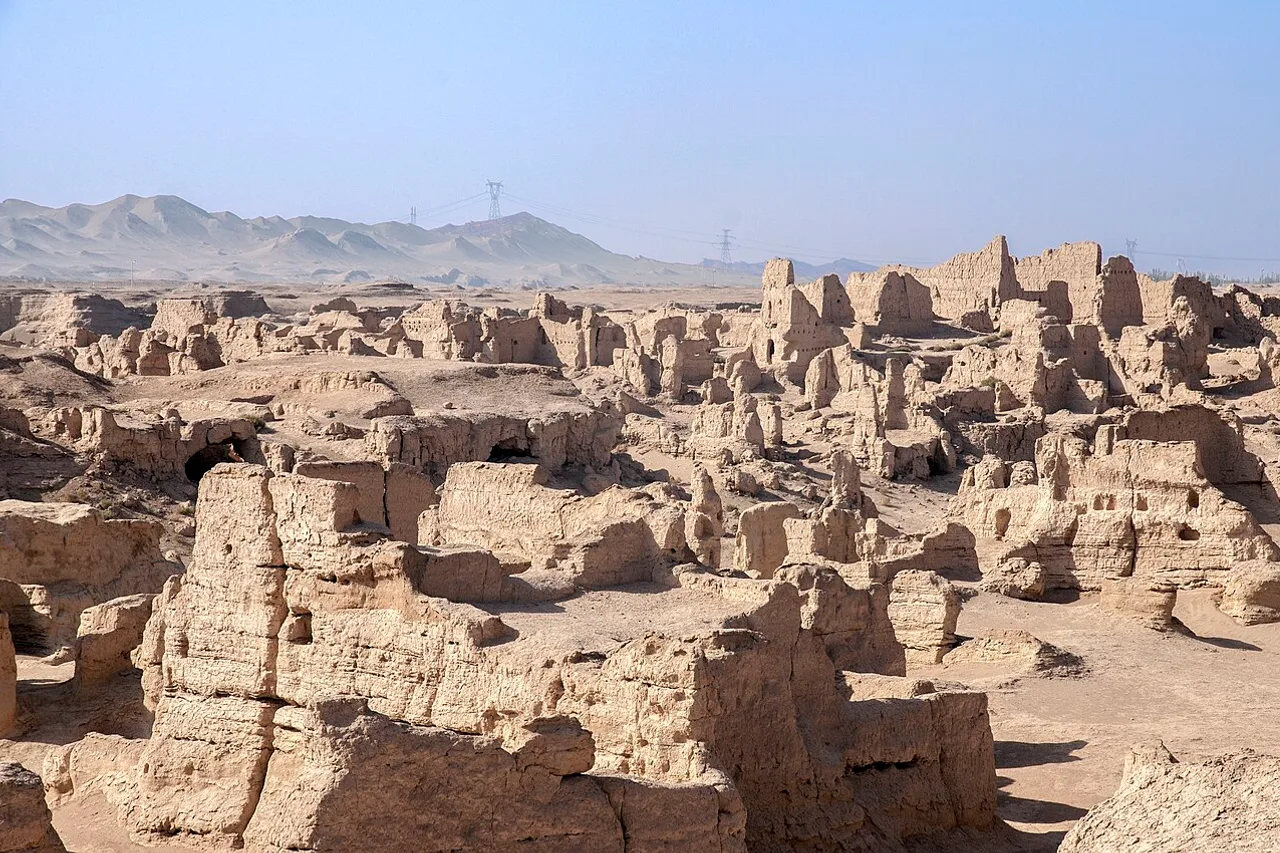
The ruins of Jiaohe lie west of Turpan, on a leaf-shaped plateau between two river valleys, ringed by cliffs more than 30 metres high.
Many of the town’s buildings were made by digging into the ground. The cliffs served as walls, and the town is said to have had no walls of its own.
3Gaochang: one of the capitals of a Uyghur kingdom
Gaochang was an oasis town in the Turpan Basin. It is said to have begun in the 1st century BC as a settlement of Han soldiers. It became a stopping place for merchants travelling the Silk Road.
In the 9th century, after the Uyghur Khaganate fell, some Uyghurs moved into this region and founded a kingdom. Its rulers are said to have spent the winter in Gaochang and the summer in cooler Beshbalik. The Uyghurs called the town Qocho.
Gaochang holds traces of Manichaeism and of Nestorian Christianity, and it had Buddhist temples too. Over the centuries, several religions had followers in this town.
4Water in a dry basin
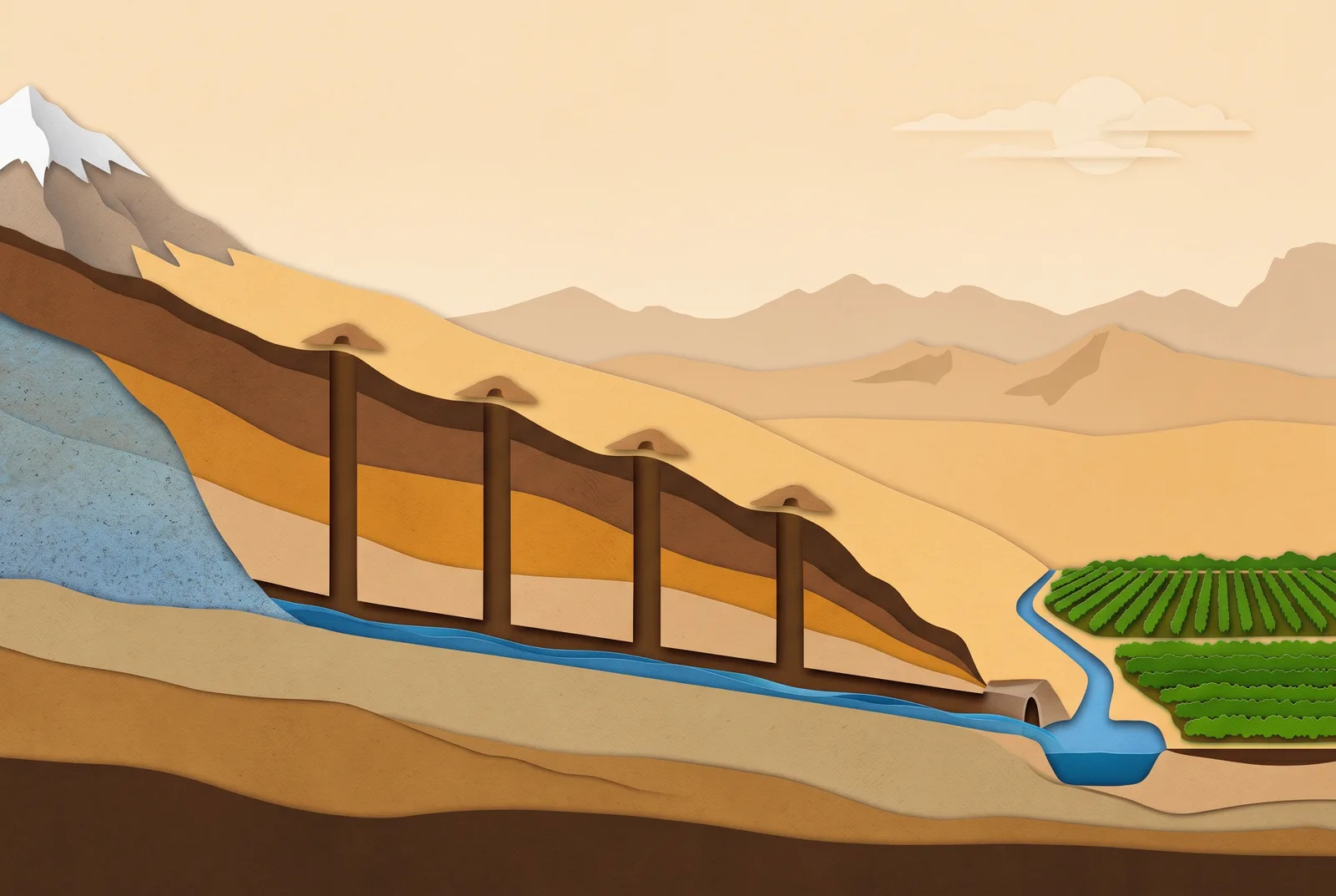
The Turpan Basin is very dry. Water reached Gaochang through karez, underground canals. Deep wells were dug inside the town of Jiaohe.
Sources (8)
- [1]Kenjisoft 辞書「خارابە」(dictionary/ijA0yEWmdbYwaTski6z5) (2026-11-25)
- [2]ئۇيغۇر تىلىنىڭ ئىزاھلىق لۇغىتى(ug.wikipedia 転載)見出し語「خارابە」 (2026-10-09)
- [3]UNESCO 世界遺産「Silk Roads: the Routes Network of Chang’an-Tianshan Corridor」(登録 2014、dossier 1442) (2026-11-25)
- [4]Wikipedia (en)「Jiaohe ruins」 (2026-11-25)
- [5]Wikipedia (en)「Gaochang」 (2026-11-25)
- [6]Wikipedia (en)「Qocho」 (2026-11-25)
- [7]写真: Wikimedia Commons「Jiaohe - Yarkhoto ruins」撮影 Scott Newman、CC BY-SA 2.0(クロップして使用) (2026-11-25)
- [8]China Daily「Mountain of relics」(2022-06-30) (2026-11-25)